Showing posts with label design. Show all posts

Sunday, November 27, 2016

November Special Events


The last week before our Thanksgiving week off was a busy one at Cannon!  First on Thursday we had our Family Engineering Night.  We had already constructed rafts in class and investigated sails and tested materials.  On the big night students brought their plans and their families and constructed the sails they had designed.  The materials workstations in the hall were packed with busy builders!


Students eagerly attached their sails to their rafts.  Then it was off to the science lab to test their work.  We had "rivers" and "wind" ready (rain gutters and fans, actually) and students faced off with another designer to see whose raft sailed all the way to the end fastest.  Students were highly motivated to go back and improve their sails for as long as time, materials, and energy held out!


The next morning we held our first Heritage Day at Cannon and invited grandparents to join us in class.  First we talked a little about how times have changed since the grandparents were in school.  (Remember chalk, filmstrips, film projectors, typewriters, and messages that had to be carried to the office by hand?)  Next we spent a little time showing off our increasing reading skills to all our visitors.


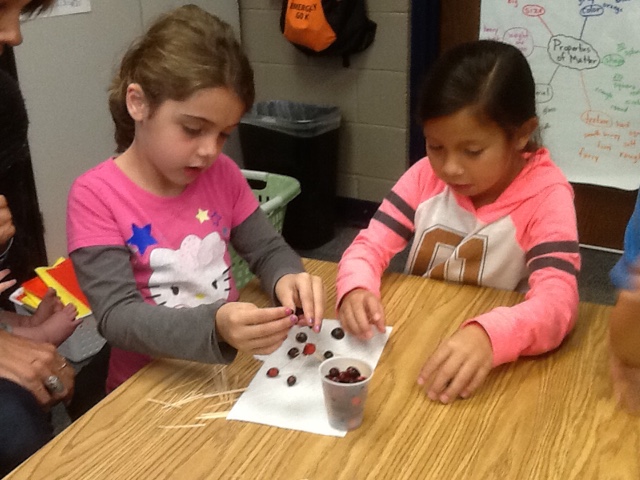
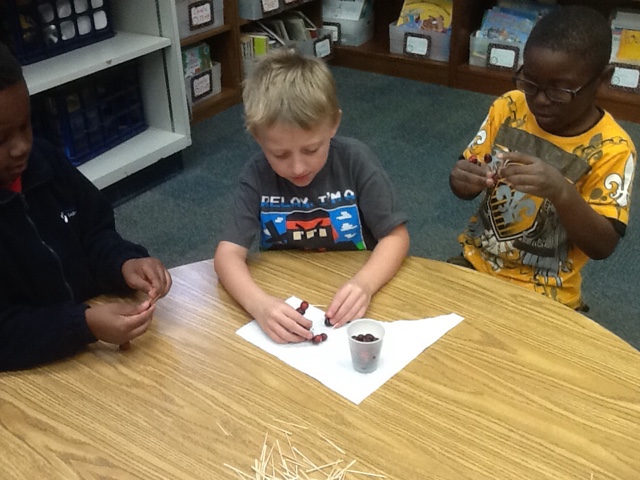
And then students and grandparents participated in a design challenge to build the tallest structure out of only toothpicks and cranberries!  You can see some serious design faces hard at work here...


  Kassidy's group had a skyscraper of a tower!!


After that the grandparents went off with their grandkids to visit the technology display and the book fair while the rest of us cleaned up and got ready for the rest of our day.  

It was great to have all of our families at these events - both the engineers building sails and the grandparents spending time with us during the day.  I hope you enjoyed your visits as much as we did!


Sunday, November 6, 2016

Mr. McGregor's Wall

Our most recent engineering challenge was to design a wall to keep a rabbit out of a garden.  We began with the "Imagine" stage of the design process.  I read the class "The Story of Peter Rabbit" and we talked about the characters and events in the literature.  We had a visit at school from "Ruffles" the rabbit so everyone could see a rabbit up close and pet it and get a good look at its fur and claws and strong back legs.  We also talked with a garden expert over the internet and asked lots of questions about gardens, garden pests, and how to keep your garden from being eaten.  All of these experiences added to the students' background knowledge about the topic and helped them be prepared to be successful.

Then came the "Planning" stage of the design process.  We studied the materials that would be available for building and the class worked in groups of about 3 students to design their first plan.

The pictures below show groups in the "Design" stage where they are building their wall according to their first plan and trying to make things work.  That led pretty quickly to the "Improve" stage where students tried to fix what didn't work the way they wanted it to.  At this point of the design process we always get into a loop of designing and testing and improving as long as time, materials, and energy hold out.


Some walls got taller than others and students learned that with limited resources, you must plan carefully.  During our final tests, the robots played the part of rabbits trying to get through the wall.  All groups were at least partially successful and during the "Share" part of the design process, we watched the final tests together and discussed what was strong about each wall and what ideas they still have for further improvements.


This design process (imagine, plan, design, improve, share) is what we use to organize our engineering projects, but really it is applicable to many other areas! In math, writing, and reading we try something out (figuring out a new word, solving a problem, spelling a word) and test it to see if it makes sense with what else we know.  If it doesn't, we go back to try to improve our solution.  As we work through many other design projects this year, students will begin to talk about these stages very naturally and incorporate the "design thinking" into many things they do.  Look for examples in daily life of how you use this cycle!

Tuesday, May 3, 2016

Engineering Cacti

One of the things we have been reading and learning about in science is interdependence - how plants and animals in an environment depend on each other.  First we talked about their suggestion of a forest environment and read a book called One Small Place in a Tree by Barbara Brenner that tells how a hole could form in a tree and the different forest animals that might make their homes there.  Then for a more unfamiliar environment, we have looked more closely at a desert.  I read the class two books:  Cactus Hotel by Brenda Z. Guiberson and Desert Giant by Barbara Bash, both of which describe animals that depend on the saguaro cactus for homes or food.  We used Google Maps to travel to Saguaro National Park and look around in street view at the cacti.  We also watched a short video clip showing many of the animals we had read about.  With all these resources we talked about what examples we found of animals making homes in the cactus or eating parts of it.

Now we are working on an engineering project to make a model showing some of the examples of interdependence we have learned about.  The model must have a 3D cactus that is between 3 and 6 popsicle sticks tall.  It must be able to stand on its own.  Then students must add three 3 D animals to their cactus and write an information card telling why each one needs the saguaro cactus.

Here are some groups hard at work on their plans:

Now we are hard at work to complete the cacti and animals:


I can't wait to see how these projects turn out!


Monday, April 25, 2016

Robotics and Engineering Excitement

We recently went to the learning commons area (formerly known as the library) to try some new robots and other engineering materials.  It was a VERY popular learning experience and will not be our last trip!

Here are some students hard at work using magnetic pieces to create a marble maze!  There is quite a bit of trial and error as students try to get it right.


These are the Dash robots.  Each one can do something different.  Programming one to drive a path on the floor or another one to play a tune was great learning fun!


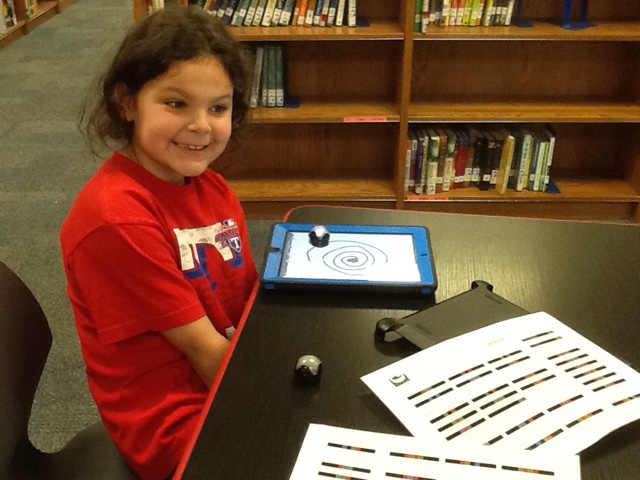
Then we tried the little Ozbots that follow the colored lines on a surface to control where they move and what special things they can do.  Students used markers on paper to draw a pathway and tell their Ozbot to speed up, spin, or other commands.  We had a whole page of commands students could choose from.


Another station the students enjoyed was also using the Ozbots, but instead of using markers on paper to code the pathway, students used a drawing app on the iPad and the robots followed that path right on their screen!


All of these activities required students to plan ahead, check whether their plan was working, and revise to make things happen the way they intended.  The sequence of the instructions mattered and students had to pay attention to detail for things to work right.  Students are learning about different coding systems and about the way objects move and behave.  Some activities required negotiating with partners to complete the task and some were independent.  All of these skills will be useful in many areas of the curriculum and in real life!