In this post I want to let everyone know what a typical day will be like for us in 1st grade. There will be times our schedule changes due to special events or projects or to share materials with other classes, but this will give you a look into an average day's events. (These photos were taken over several days during the first days of school.)
Our school day begins with breakfast, KCAN, and circle time. In circle time we might share what we did over the weekend, our thoughts about school, problems our class needs to solve, or goals or wishes we have. After circle time we always share a story that I read to the class.
Then we will have science and engineering time. We might be going out to the garden to observe the weather and the season, studying plants and their parts, reading or writing about science or conducting investigations.
In these pictures we are in the science lab observing photos, models, and real objects and trying to find the connection between all the things at one station. The students found objects that all had to do with birds, sea creatures, bugs, reptiles and mammals.


After science, we usually take a short movement break with dance videos from GoNoodle or other activities and a bathroom and water break for those who need it. Then it is time for reading. We may start with a short book or just use a book we have already heard as part of our mini-lesson for the day. We may be working on strategies to figure out words when they are stuck, things to think about while reading to help them comprehend the book more deeply, reading together to hear rhymes and poems, working on word patterns or more! Then students will have a chance to do several kinds of reading. They may read in a group with me or with me individually. They may read on their own, with a partner, on their iPad with apps like RAZ-Kids or iStation, or do other activities to practice word patterns or sight words. Reading with me is the time when they will get to work on strategies that are just what they need to make progress to the next level. Reading on their own gives them a chance to practice those strategies in books that are just right for them. Partner reading time gives them a chance to read together with a friend and enjoy stories. They will often pick more challenging books with a partner, especially books I have read to the class, when they can help each other. Since they are reading aloud with a partner, it also helps them practice their fluency - reading smoothly and with expression.
Here are some partners enjoying books together:
After our reading time, we will often take another short movement break before we start writing. Writing time also begins with a short mini-lesson about conventions of writing (capitalization and punctuation), choosing ideas to write about, organizing their writing, revising when they have finished, and more. Then students will have time to write and make quick illustrations for their stories. (We will only do full-color, detailed artwork when we are finishing stories to publish.) Sometimes we will share their writing with the whole class and sometimes in small groups or with partners. We will also spend some time here working on handwriting and spelling skills.
Writers hard at work:
After writing, we have a break for lunch and recess. Then it is time for math. This year we will learn about numbers to 120 (and more), adding and subtracting to solve problems, geometry shapes, fractions, money, and time. Sometimes we will use manipulatives like blocks or other objects to begin learning a concept hands-on. At other times we will do work on paper or iPads, drawing pictures or writing equations to show their mathematical thinking.
Our first math unit is on graphs and these pictures show graphs made on the tables as students sorted their pattern shapes by color. (After this we made graphs using a math app and then put those pictures into another app to label the graphs. This is what we call app-smashing!)
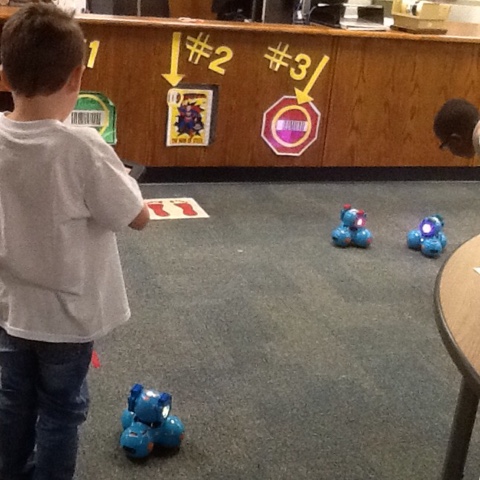
When math ends the students go to specials classes. After that we have a block of time at the end of the day that is for a variety of things. We may use the time to work on big engineering projects or projects for other subjects that need more time. (Lots of our engineering projects are connected to science concepts, but we sometimes have connections to social studies, math, or language arts.) We may be working on learning to code, building structures, doing design challenges, building and programming Lego robots, and other STEM related activities. We might also be working on setting goals for learning or tracking progress on charts for reading, writing, and math.
Here are some of this year's first design challenges. Build a structure as tall as possible with the materials:
Build a structure where only 1 piece touches the table:
Build a structure that can support the weight of the blocks in the large cup:
Build the tallest structure using 1 piece of paper and NO glue or tape:
The last thing we do every day is to share another read aloud book before students are dismissed. Starting and ending the day with read aloud time gives us a (kind of) quiet time (there's a surprising amount of conversation during the stories) to share good books and get excited about reading. We get to share what we think about the books and get to know all kinds of characters in them. It is a happy way to begin and end our learning time! I hope you enjoyed seeing students at work throughout all parts of our day.




 We also got to use the new Osmo devices that can "see" what you put on the table in front of them. Students used letter cards to play a spelling game with a partner (or on their own). The cards are color-coded so the device knows which player made the play and gives them their points!


